Planning fuel and charging stops on long empty stretches
Find the gaps between stations on your route, plan with realistic range and add fuel or charging stops to the day plan, for petrol, diesel and electric cars.
On most routes, fuel and charging stops look after themselves. On long, thinly populated stretches they don't. Desert highways, mountain roads and remote coasts can go a long way between stations, and some of those stations close at night or on Sundays. A little planning removes the worry.
Find the gaps on your route
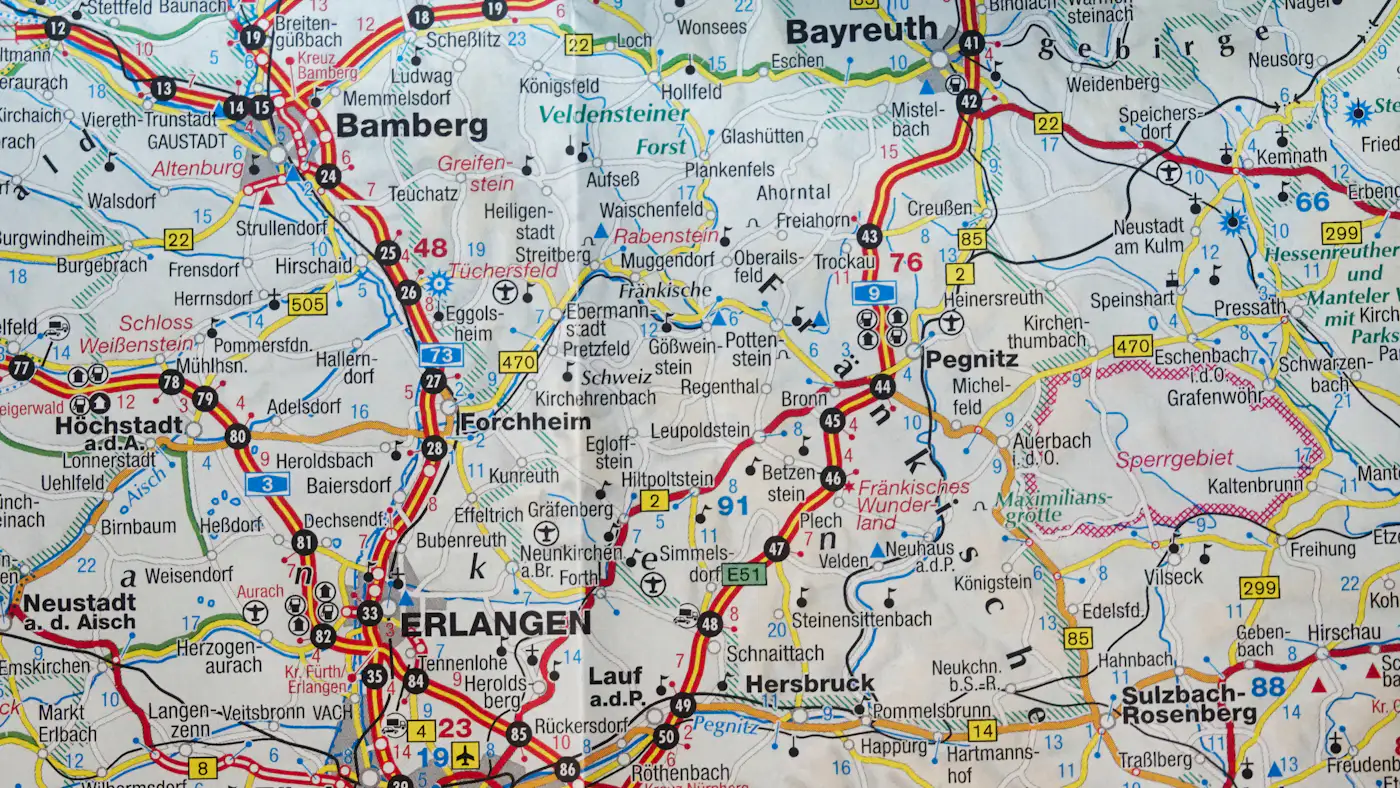
Look at each driving day and note the longest stretch with no towns on it. Then check, on a map that shows services, where the stations actually are. Small villages don't always have one, and a station marked on the map may have closed. Recent reviews or the operator's own site are a better guide than an old map symbol.
Mark any stretch where the gap is more than about half your vehicle's realistic range. That is where you need a plan.
Work from realistic range
Range drops with speed, hills, a loaded roof box, air conditioning and, for electric cars, cold weather. On a long trip, treat the figure on the dashboard as optimistic and plan with a margin. A common habit on remote roads is to refuel or recharge at half a tank or half a battery, even if the next station seems close.
Petrol and diesel cars
- Fill up in the last town before a gap rather than hoping for a station partway along.
- Check opening hours. Rural stations may close early, and some pumps accept only certain cards.
- Carry some cash in case the card terminal is down.
Electric cars
Charging needs more planning than fuel because each stop takes longer and chargers vary in speed and connector type.
- Check that the chargers on your route take your connector and payment method. Some networks need an app or account set up in advance.
- Have a second charger in mind near each planned one, in case the first is busy or out of service.
- Charge overnight where you can. A place to stay with a charger, or one close by, takes pressure off the next day.
- Plan charging stops where there is something to do, such as a meal or a short walk, so the wait is useful.
Build the stops into the day plan
Write each fuel or charging stop into the itinerary as a real stop with a time, the same way you would a viewpoint or lunch. That keeps it from being squeezed out, and everyone in the car knows where the next one is. Add the time to your daily total too; see how long to drive per day.
Where to go next
Save the stations offline before you set off, since remote stretches often lack mobile signal; offline maps and a paper backup explains how. Some planners, including Wanderlog, let you add fuel or charging stops as places on the route, which keeps them visible next to the rest of the day.